 Trending in AU
Why Workers' Feet Are Breaking Down Faster Than Ever And What One Podiatrist Discovered About the Real Cause

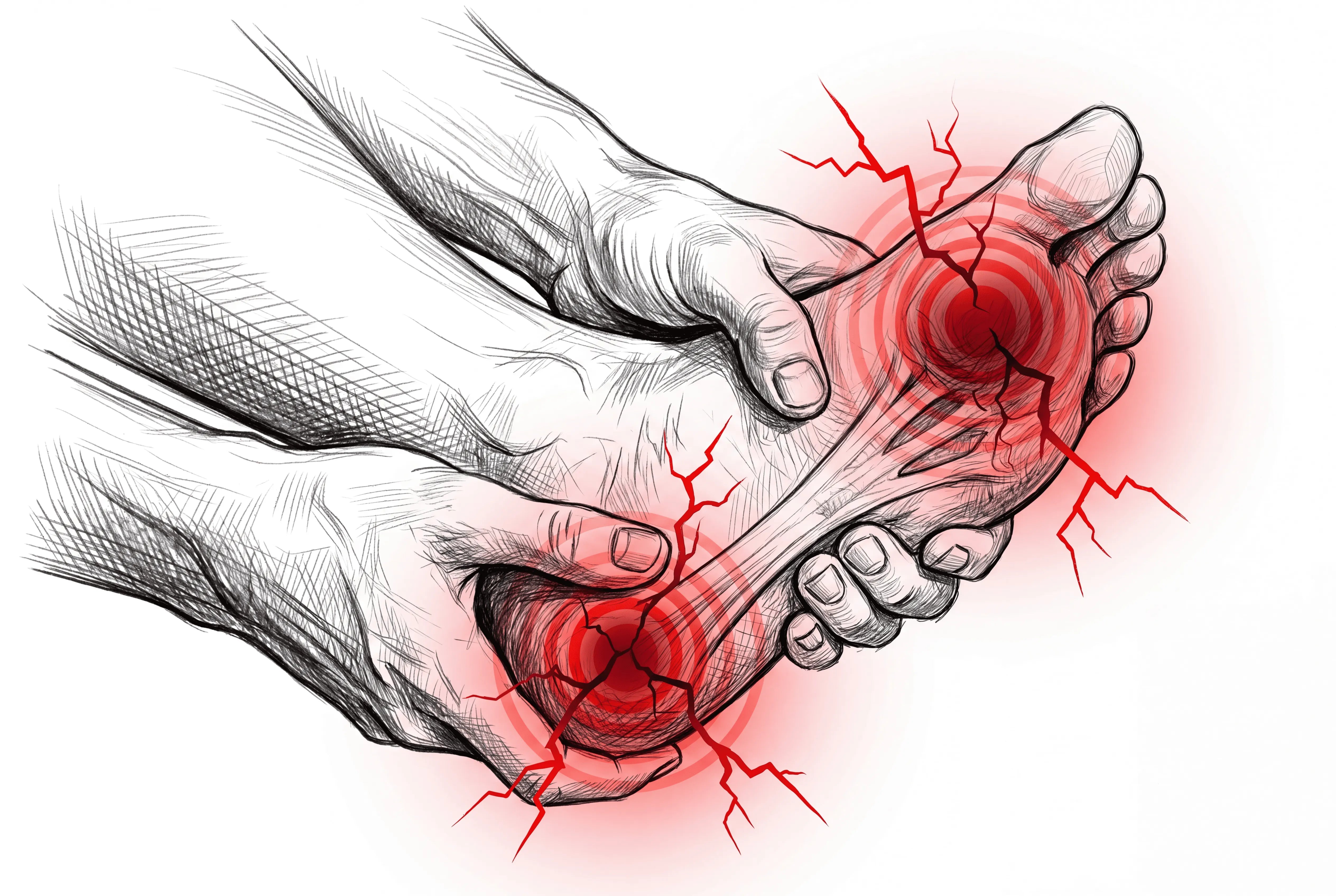
David should have been fine. Thirty-five years old. Healthy. Strong. Six months into a warehouse supervisor role paying $115K. Instead, he was in the staff bathroom at lunch, boots off, feet burning, calculating whether he could afford to quit.
If you've spent money on premium work boots and they stopped helping after a few weeks...
If you've tried gel insoles, custom orthotics, ice baths, and nothing worked past the first month...
If your feet hurt worse now than when you started, and the pain's spreading to your knees and back...
You need to read what Dr. Michael Torres discovered.
Because what's destroying workers' feet isn't what anyone thought it was. And the solution has been hiding in plain sight for years.
71% of Workers on Hard Surfaces Report Chronic Foot Pain, But Almost None Know the Real Cause
Dr. Michael Torres is a certified podiatrist who's treated workers in Brisbane for 17 years. He's seen thousands of tradesmen, oil field workers, warehouse staff, miners, kitchen workers, and factory employees.
And he kept seeing the same pattern.
Workers would come in with heel pain, arch pain, burning sensations. They'd tried everything: expensive boots, gel inserts, custom orthotics, physiotherapy. Some had even considered surgery.
But here's what shocked him: most of these workers had perfectly healthy feet.
No structural abnormalities. No genetic predisposition. No underlying conditions.
So why were they in agony?
The Case That Changed Everything
Two years ago, a 39-year-old FIFO electrician named Glenn came to Dr. Torres' clinic. Eight months into a new roster. Feet destroying him. Starting to worry about medical clearance.
Glenn had done everything right. Premium $290 Mongrel boots. $70 orthopedic insoles from the podiatry supply shop. Compression socks. Epsom salt baths every swing off.
Nothing worked past three weeks.
Dr. Torres examined his feet. Structurally sound. But when he pressed his thumbs into Glenn's heels, something was immediately off. The tissue felt soft. Flaccid. Like pressing into a cushion that had lost all its memory. That wasn't what a healthy, well-supported heel felt like.
"Show me your boots," Dr. Torres said.
Glenn handed them over. Eight-month-old boots. Barely worn on the outside.
Dr. Torres removed the insoles. Pressed down on the heel section. It compressed. When he released it, it sprang back.
But did it spring back all the way?
He grabbed a caliper. Measured the heel thickness. Compared it to a brand new insole of the same model.
The eight-month-old insole had lost 47% of its original thickness.
Permanently compressed. Invisible to the naked eye. But measurable at the cellular level.
"This is what's destroying your feet," Dr. Torres told Glenn. "Not your boots. Not your body. Your insoles collapsed months ago and nobody told you."
That moment changed everything Dr. Torres thought he knew about workplace foot pain.
What 17 Years of Clinical Practice Revealed About Insole Failure
Dr. Torres spent the next six months researching. He examined the insoles from 200 workers across different industries, including construction, mining, warehousing, manufacturing and hospitality. Premium brands. Expensive gel inserts. Custom orthotics.
Every single one showed permanent compression deformation within 8-12 weeks of heavy use.
The foam or gel would compress under repeated load and never return to original height. The worker couldn't see it. But the body could feel it. With nothing left to absorb the impact, every step was driving raw force straight into tissue and bone that was never built to take that kind of punishment — breaking it down a little more with every shift.
Then he discovered something that made him furious.
The Admission Boot Companies Don't Want You to Know About
Recently, major boot manufacturers started quietly acknowledging something in their technical documentation: their stock insoles are "minimal" and "designed to meet basic manufacturing standards," not to survive the demands of physical work.
What the major boot brands rarely advertise: the stock insoles shipped with even the most premium pairs are built to basic manufacturing tolerances, not to survive sustained load on hard surfaces. The leather upper, the safety toe, the outsole — all engineered to last years. The foam insert sitting inside them? Built to a completely different standard. Footwear specialists have understood this for years. Most workers find out the hard way.
Dr. Torres found internal documentation from one major brand stating: "Factory insoles provide baseline cushioning. For extended wear on hard surfaces, we recommend aftermarket orthotic insoles."
They've known all along their insoles can't handle the job. They just never told you clearly enough.
But here's the catch: the third-party insoles most workers buy? They're made from the same foam or gel that compresses under sustained loads.
"We've been treating the symptoms," Dr. Torres realized. "We've never addressed the cause."
The Hidden Mechanism Destroying Workers' Feet
Dr. Torres called it Collapse Fatigue.
Here's how it works:
Standard insoles, even expensive ones, use foam or gel padding. Under office or retail conditions, they last 6-12 months. Under demanding work conditions (concrete floors, gravel, steel grating, 10+ hour shifts, 200+ lbs bodyweight plus load weight), they fail in weeks.
The cellular structure of the foam compresses permanently. The insole looks fine. Feels fine when you press it with your thumb. But under sustained load, it's lost 30-50% of its cushioning capacity.
Once collapsed, every step drives impact straight through to your heel's fat pad, which is your body's natural shock absorber. But constant unprotected impact crushes this fat pad. It gets thinner. Eventually it can't protect you anymore.
That's Fat Pad Atrophy. That's the burning pain workers feel.
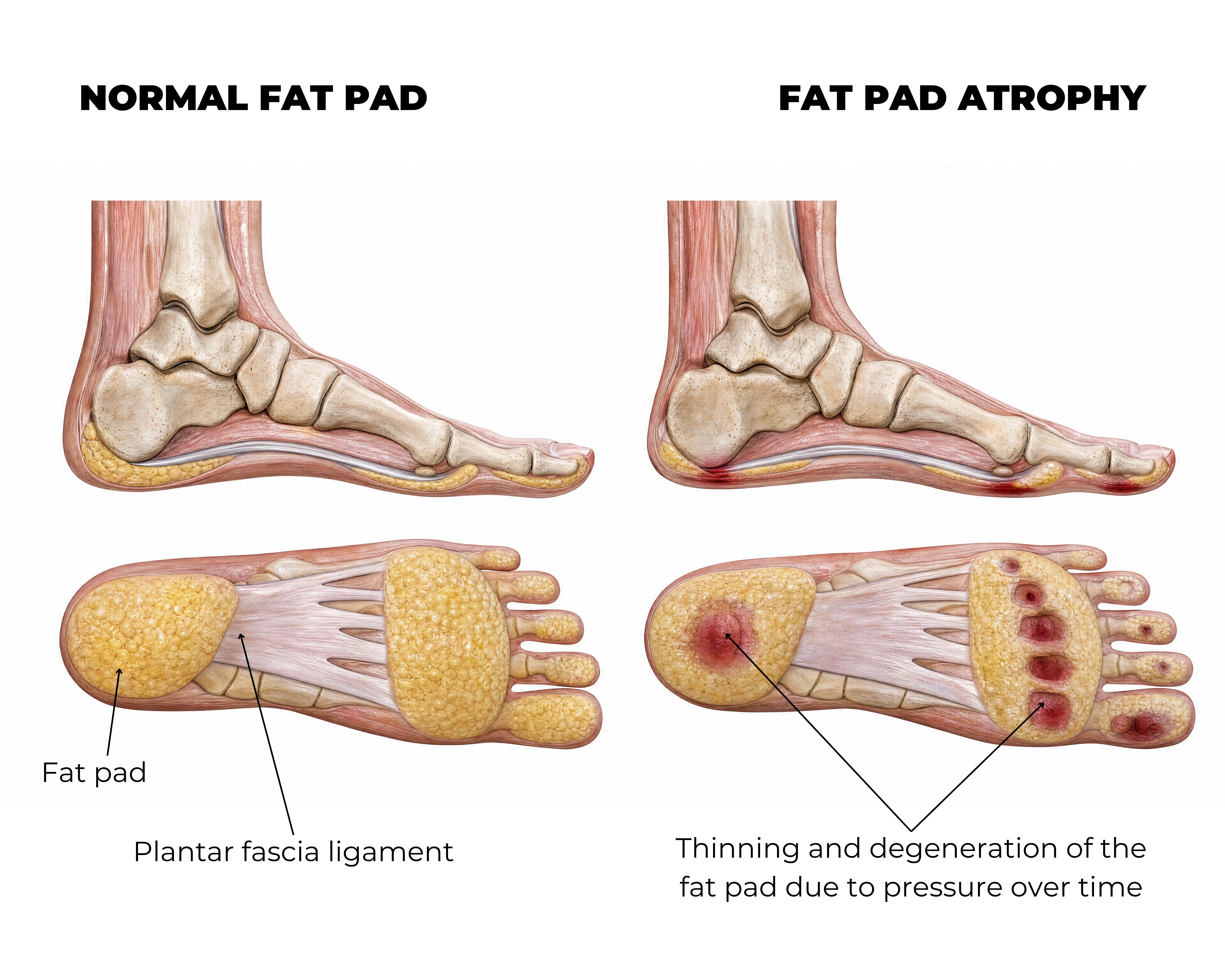
Then the plantar fascia gets overstretched and inflames. The plantar fascia is the thick band of connective tissue that runs along the bottom of your foot, connecting your heel bone to your toes and holding your arch together. It's not designed to absorb impact — that's not its job. But when there's nothing else left to do it, the fascia starts taking stress it was never built for. It tears. It inflames. That's Plantar Fasciitis. That's the sharp arch pain.
Then nerves get compressed from all the swelling and inflammation. That's Neuropathy. That's the throbbing, the tingling, the feeling like you're walking on broken glass.
And it all starts with collapsed insoles that nobody told you about.
Why Everything You've Tried Has Failed
Premium work boots? They came with foam insoles that collapsed in week 3. The $290 leather shell was fine. The $5 insole inside wasn't. And the manufacturer admitted it in the fine print.
Gel inserts from the drugstore? Same principle. Gel compresses even faster than foam under heavy loads. Feels great for 10 days, then flattens permanently.
Custom orthotics from the podiatrist? Designed for arch support, not impact absorption. They're rigid. On concrete, they can actually increase impact forces. And they cost $600-800.
Ice baths? Reduce inflammation. Don't stop the cause. The collapsed insoles keep re-creating the damage every shift.
Anti-inflammatories? Mask the pain. Don't prevent the impact that's destroying your fat pad.
Every solution treats symptoms. None address Collapse Fatigue.
What Hospital Surgical Teams Use (And Why You've Never Heard About It)
Here's what shocked Dr. Torres most.
Surgeons who perform 8-12 hour procedures standing on operating room floors don't use standard insoles. They use multi-layer compression-resistant systems.
Systems designed specifically to resist permanent deformation under sustained loads.
But these systems cost hospitals $200-400 per pair. And until recently, they weren't available to the general public.
One company changed that.
The WorkFit™ Cushioning System: Engineering That Survives Real Work Conditions
SoleBrace® didn't just make "better insoles." They reverse-engineered the systems surgeons use and made them available to workers.
The WorkFit™ Cushioning System uses four engineered zones:
Because it prevents Collapse Fatigue, it stops the cascade before it starts. The fat pad stays protected. The fascia doesn't overstretch. The nerves don't get compressed.
Not by masking symptoms. By preventing the cause.
The 90-Day Worker Trial
Dr. Torres worked with SoleBrace to test the WorkFit system with 150 workers across Brisbane and regional Queensland. FIFO miners, construction workers, warehouse staff, manufacturing employees, kitchen workers. All experiencing chronic foot pain.
All had tried multiple solutions that failed.
After 90 days:
- 127 out of 150 reported "significant to complete pain relief"
- 89% said they could work full shifts without pain medication
- 76% reported their knee and back pain had improved
The insoles measured after 90 days? Average compression loss: 4%. Standard foam insoles lose 40-50% in the same period.
Dr. Torres put them in his own work shoes. Wears them every clinical day. His 24-year-old daughter wears them in her hospital nursing shifts.
"I've been a podiatrist for 17 years," Dr. Torres said. "I've never seen anything that addresses the root cause like this does."
What "Normal" Actually Looks Like
For decades, we've accepted that workers on hard surfaces will have foot pain. That it's just part of the job. That bodies break down on concrete.
But that's only true if the insoles fail in week 3 and nobody tells you.
Workers shouldn't be hobbling to their cars at the end of their shift.
They shouldn't be taking four Nurofen a day just to function.
They shouldn't be doing ice baths every night or considering quitting good jobs because of foot pain.
The gap between what workers endure and what they should experience is measured in years of unnecessary suffering.
Glenn, the oil field electrician who was worried about medical clearance? He's two years into that roster now. Feet fine. Passed his last medical with no issues.
All because someone finally told him about Collapse Fatigue.
Why You Need to Act Now
Word is spreading through worksites. Workers are discovering this. The professional secret is getting out.
SoleBrace is a small Australian company. They're not Woolworths. They can't keep up with demand spikes.
Right now they're offering Buy 2, Get 2 Free to help workers get ahead of the problem. But that offer won't last when inventory tightens.
And they back it with a 30-day guarantee. Wear them on your actual job. If they don't deliver what Dr. Torres describes and your feet don't feel dramatically better, return them for a full refund.
No questions. No hassle.
The Choice Is Simple
You can keep trying solutions that treat symptoms while Collapse Fatigue destroys your feet shift after shift.
Or you can address the actual cause.
Your feet aren't the problem. The collapsed insoles are.
Even the boot companies admit their stock insoles can't do the job. They just never told you clearly enough and they never told you what actually works.
Dr. Torres has seen what happens when workers wait. The pain spreads. The damage becomes harder to reverse. The years of unnecessary suffering add up.
But he's also seen what happens when workers address Collapse Fatigue before it's too late. The relief. The return to normal function. The realization that the suffering was preventable all along.
Don't wait until the pain forces you to make decisions you don't want to make.
Don't wait until your knees and back are paying for what your feet should have been protected from.
Don't wait until you're looking at the things you've worked for and wondering if you'll be too broken to enjoy them.
CLICK HERE To Get SoleBrace® WorkFit™ Insoles
The 30-day guarantee means you risk nothing. The Buy 2 Get 2 Free offer means you can stock up and have full year protection and have backup pairs ready.
127 workers in that trial discovered their feet weren't the problem.
Time to find out if yours aren't either.
GET YOUR WORKFIT INSOLE NOWWhat Workers Are Saying
